

GLORIOUS SEEDPODS and CONES in the NATURALIZED Aquarium
Building a Dynamic and Interactive Environment for your Aquarium Fish and Invertebrates with Natural Seedpods

Seedpods
Second only to driftwood, seedpods are among the most exciting aquarium botanicals available. Plants and trees develop unique, exotic, and highly specialized mechanisms to disperse their seeds. Once those seeds are gone, the durable, woody protective layer that remains makes an ideal natural shelter for fish and shrimp. Beyond their aesthetic appeal, these pods release beneficial tannins and organic compounds into the water. They are equally popular in bioactive terrariums, where their intricate shapes add fine visual detail and provide an excellent food source for terrestrial scavengers like isopods.
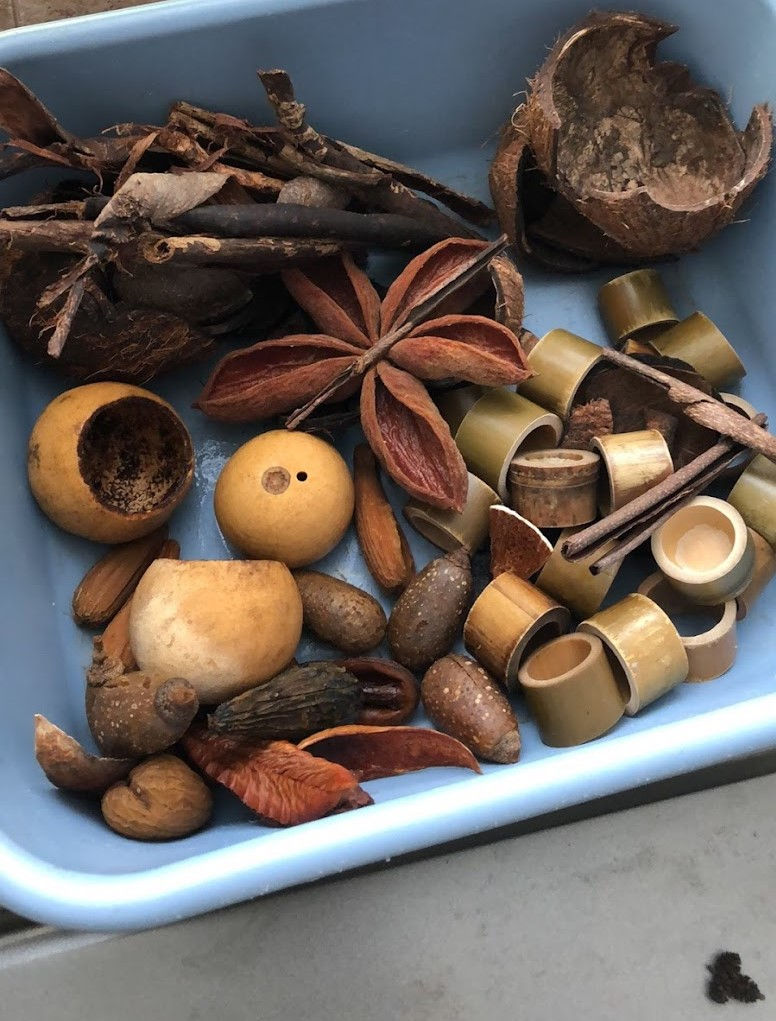
Assorted Aquarium Seedpods
Preparation & Acclimation Guidelines
To prepare seedpods for aquarium use, follow these preparation steps:
Rinse for 60 seconds or scrub off visible dirt.
Boil for Sterilization and to Sink: Boil (or steep) the pods for 10 minutes to 1 hour. This sterilizes the wood, releases the heaviest initial tannins, and helps the pods sink.
Remove Fleshy Tissue: Clean out any remaining soft or fleshy insides to prevent rapid decomposition and water quality issues in your tank. Boiling or soaking may soften the inner layers of cup-like structures (such as Sororoca pods or Buddha nuts). Remove this material by scraping the interior with a brush or metal spoon.
Wipe away Sap and Resin: If a jelly-like substance appears during boiling (Sterculia spp.) it is typically natural resin or sap. Simply scrub or wipe it off the pod and change the water if desired.
Refresh the Water: Change your boiling water if you notice oil slicking the surface or excessive debris accumulating in the pot.

Mokha Pod
Shrebera swietenioides
Origin: India
Size: 6 cm - 8 cm
Tannin Level: Medium
This pear-shaped botanical opens as it dries to disperse its seeds. While it initially closes when first submerged in an aquarium, it slowly reopens underwater over time. Once open, it provides an excellent natural shelter and foraging surface for shrimp, snails, and baby bristlenose plecos. Its exceptionally tough, woody structure ensures it remains intact for up to a year or more in an aquatic environment.
Mahogany Petal
Swietenia macrophylla
Origin: Brazil (Central America)
Size: 6 cm - 9 cm
Tannin Level: Medium
Mahogany Petals are flat, woody botanical structures sourced from the interior of the hardwood "sky fruit" produced by the Mahogany tree (Swietenia macrophylla). Resembling a leaf, a true flower petal, or even a rabbit's ear, these unique shapes are actually modified flower carpels. When introduced to a freshwater aquarium, they serve as excellent natural leaf litter, offering both functional and aesthetic benefits. The woody surface serves as a prime breeding ground for biofilm, providing a continuous, natural food source for shrimp, snails, and micro-fauna. Because of their robust, woody composition, these structures are highly durable and typically last around a year in an aquarium, unless actively grazed on by wood-eating catfish. To prepare them before adding them to your tank, boil them for 15 to 20 minutes to sanitize them and help them sink more easily. Due to their seasonal availability, supplies may occasionally be limited.
Spiky Gumball
Liquidambar styraciflua (American Sweetgum)
Origin: North America, Central America
Size: 2 cm - 3 cm
Tannin Level: Low
This unique, spherical pod features a striking appearance reminiscent of a medieval spiked mace. Typically smaller than a golf ball, its natural openings provide excellent shelter and foraging opportunities for baby shrimp and microfauna. Over time, the outer spikes decompose within a few months to reveal an intricate honeycomb structure underneath. While the outer layer breaks down relatively quickly, this durable inner skeleton can last up to a year in the aquarium.

Liquidambar styraciflua (American Sweetgum)
Lotus Pod
Nelumbo nucifera
Origin: India
Size: 7 cm - 10 cm
Tannin Level: Low
The lotus flower and seedpod symbolize enlightenment, spiritual purity, and prosperity. Beyond their rich cultural heritage, these distinctive seedpods serve as a functional, natural addition to bioactive enclosures. They are highly favored by freshwater shrimp, snails, and other scavengers. The intricate, honeycomb-like structure provides excellent hiding spots for shrimplets and a massive surface area for biofilm generation, which serves as a vital natural food source. In terrestrial setups, they are enthusiastically relished by isopods, springtails, and other clean-up crew organisms as both a supplemental food source and a micro-habitat. Because they possess a softer composition than denser botanicals, lotus pods release beneficial tannins into the water and decompose more rapidly. In an aquarium setting, they typically last for a few months before completely breaking down, naturally enriching the ecosystem as they degrade
Note: To prepare lotus pods for use, gently boil them for no more than 10 to 15 minutes to sterilize them and help them sink. Avoid over-boiling, as this will compromise their structural integrity. For a gentler alternative, steep the pods in hot water until they are fully saturated.

Pond with lotus lily pads and flowers.
Coconut Flower Crown
Cocos nucifera
Origin: Central Indo-Pacific, Equatorial
Size: 4 cm - 5 cm
Tannin Level: Medium
Coconut flower crowns (also known as calyces) are the hardy, woody structures that secure coconuts to the palm tree. In the home aquarium, this unique botanical serves as both an eye-catching aesthetic piece and a functional powerhouse. Occasionally, you may even find them still attached to a palm frond, sold under the name "Coconut Seed Flower."
Featuring a complex texture of both smooth and rough surfaces, these durable crowns provide an ideal grazing platform for biofilm, making them perfect for Loricariidae species (plecos), other catfish, and freshwater shrimp. They decompose slowly, lasting up to a year submerged, while releasing gentle, health-promoting tannins that mimic natural blackwater habitats.

Cocos nucifera (Coconut Flower Crown) attracting ramshorn snails.

Palm Trees
Ping Pong Pod
Cerbera odollam
Origin: India, Southern Asia
Size: 8 cm - 12 cm
Tannin Level: Low
This exotic fruit is not for human consumption. Once the toxic seeds are removed, the pods should be boiled and scrubbed with a bristle brush between boilings to remove residual debris. Grazing Ancistrus and other Loricariidae species gravitate toward the fibrous structure of these pods, utilizing them as a supplemental grazing surface. Additionally, cave-spawning fish may use the internal cavity as a secure site to deposit their eggs.
Caution: The seed is highly toxic and must be removed; wear gloves and a mask when handling raw (unprocessed) pods.

Cerbera odollam (Ping Pong Pod) after extensive preparation.
Sororoca Flower Pod
Penca sororoca (Strelitzia palm)
Origin: Brazil
Size: 10 cm - 15 cm
Tannin Level: Low
Closely related to the Bird of Paradise plant, the Giant Strelitzia (Strelitzia nicolai) produces large, woody capsular seed pods that serve as exceptional natural hardscape additions for the aquarium. While these pods may initially close up when first submerged and rehydrated, they eventually relax and open over time. Once open, the deep, hollow chambers create excellent shelters and secure breeding caves for Ancistrus and other small pleco species. Furthermore, as the organic surface naturally breaks down, it encourages the growth of a rich microbial biofilm, providing a vital, continuous grazing food source for freshwater shrimp, snails, and other invertebrates.

Penca sororoca (Strelitzia palm) temporarily closed once submerged in aquarium.
Coconut Shell / Coconut Husk
Cocos nucifera
Origin: Central Indo-Pacific, Equatorial
Size: 5 cm - 20 cm
Tannin Level: Low
Tropical fish originate in equatorial regions where palm trees line the shorelines, making coconut shells a natural and familiar habitat feature for many species. In the home aquarium, coconut shells make excellent, spacious caves that are ideal for dwarf cichlids, small catfish, and juvenile predatory fish seeking secure territory.
You can easily craft these shelters at home. To prepare them, thoroughly clean out the inner coconut flesh, boil the shell to release natural oils and loose tannins, and then bake it in the oven to dry completely.
In addition to the hard shells, pieces or strips of coconut husk can be added to the tank. This highly fibrous material is incredibly beneficial for grazing inhabitants like plecos and shrimp, who feed on the wood matter and the microscopic biofilm that develops on its surface. While solid coconut shells sink immediately, the lighter, fibrous husk chunks will float unless they are thoroughly soaked or boiled beforehand. Once introduced to the aquarium, durable coconut shells will last for several years, whereas the softer, fibrous husks will gradually break down over the course of a year.

Coconut shell is used for rearing by the Inca Stone Cichlid (Tahuantinsuyoa macantzatza).
Cones
The woody texture of cones and catkins makes them a concentrated source of beneficial tannins, which gently tint the water and lower pH to replicate natural blackwater habitats. The compact size of these botanical elements makes them ideal for smaller-scale aquascapes and nano tanks, where larger leaves might overwhelm the layout. Furthermore, their intricate, ridged structures provide excellent hiding spots for grazing microfauna. As the cones slowly decompose, they create a long-lasting surface for cultivating a rich dietary biofilm, making them a highly recommended addition to Neocaridina and Caridina shrimp tanks. Like most aquarium botanicals, they should be boiled or soaked prior to introduction to ensure they sink and are safe for inhabitants.
Not all cones are safe for aquarium use. For example, the common coniferous pine cone is not safe for the aquarium, and generally, coniferous trees are excluded from aquarium botanical use.
Alnus glutinosa (Black Alder cone), Alnus incana (Speckled Alder cone/catkin), and Casuarinaceae family (Casuarina Cone).
Alder Cone
Alnus glutinosa (Black), Alnus incana (Speckled)
Origin: Europe (Black), North America (Speckled)
Size: 1.5 cm (Black), 1 cm (Speckled)
Tannin Level: High (Black), Medium (Speckled)
The European Black Alder provides the highest tannin concentration for its size. Speckled Alder, found in Canada, develops smaller but similar cones. These alder bushes typically grow along the shores of wetlands and rivers. Other dried cones from the birch family are generally safe for aquarium use. While their woody tissues can last about six months in a tank, tannin release and biofilm production will decline after a couple of months. Adding fresh alder cones monthly will maintain stable tannin levels and perfectly complement the leaf litter on the aquarium floor.

Alnus glutinosa (Black Alder Cone) in a Tangerine Tiger Caridina shrimp aquarium.
Casuarina Cone
Casuarinaceae family
Origin: Australia, Thailand
Size: Small (1.5 cm) - Large (3 cm)
Tannin Level: Low
Casuarina cones release a lower concentration of tannins into the water, making them ideal for aquarists who want the benefits of botanical layout elements without heavy tinting. Visually, they offer a highly textured, porous appearance that provides excellent surface area for beneficial biofilm growth. They are highly durable, lasting up to a year in the aquarium, and are generally larger than traditional alder cones, making them a fantastic alternative shelter for dwarf shrimp and fry.

Preparation of a mixture of cones and seedpods by boiling on the stovetop.
Take Away
Now that you are familiar with their benefits, these tannin-rich items might just give your aquarium the edge when breeding a challenging species or creating a geographically inspired aquascape. Botanical seedpods and cones make it easy to introduce natural features that enrich your aquarium's environment.
Please comment below!




Comments